Guide
How to prepare for a RightShip RISQ inspection
19 June 2026 · 9 min read
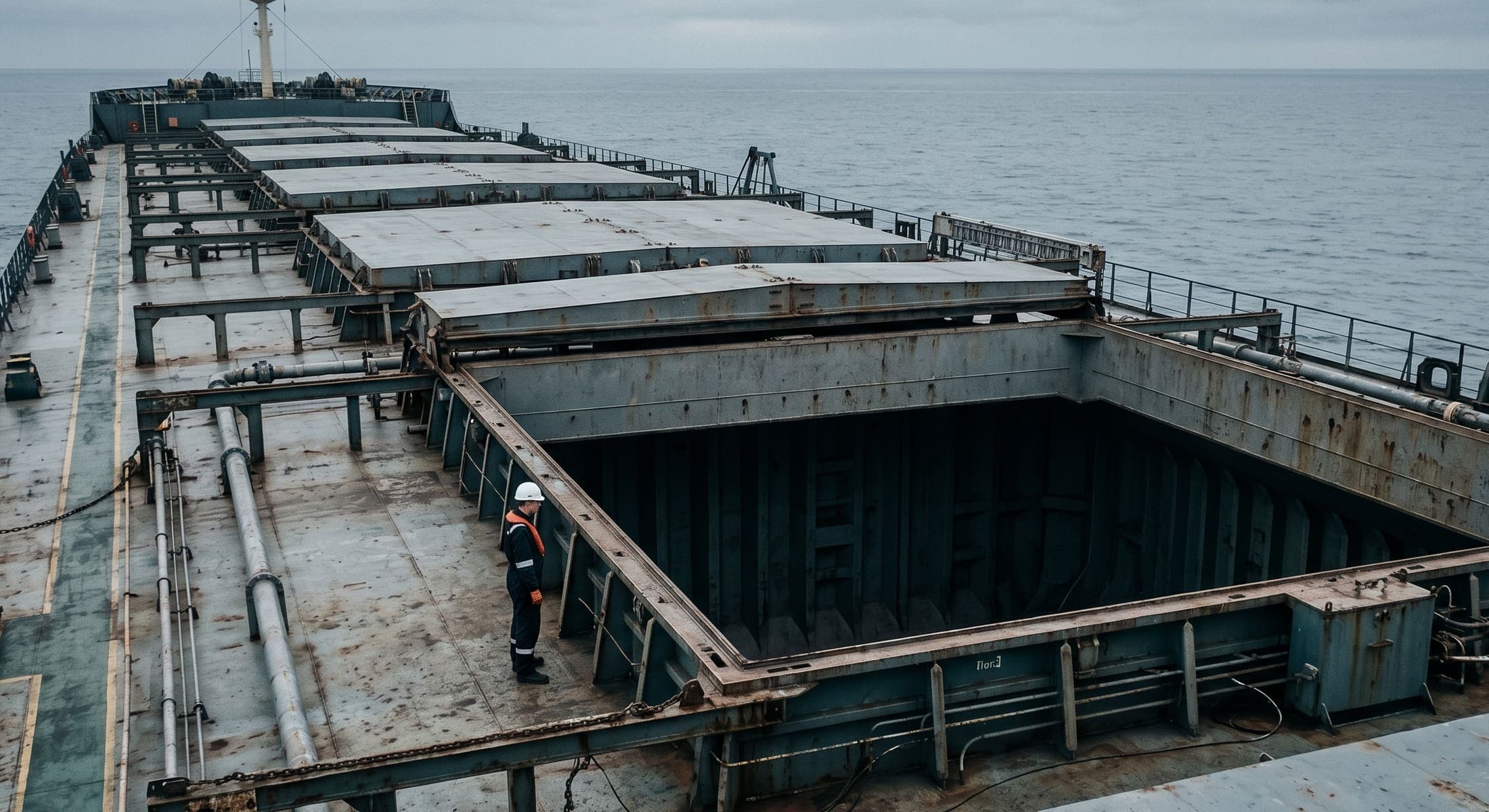
For a dry bulk operator, a RightShip inspection often sits between the vessel and its next fixture. It is not a statutory inspection and it issues no certificate. It is a charterer-facing assessment of whether the ship is a sound risk to carry cargo, and for older tonnage it becomes a gate that has to be cleared before the vessel trades.
This guide covers what RightShip is, why an ageing vessel is inspected more readily, what the RISQ questionnaire verifies, and a pre-inspection routine that keeps the ship ready rather than scrambling when the inspection lands.
What RightShip is, and what the RISQ is
RightShip is a maritime risk platform used by charterers, cargo owners and terminals, strongest in the dry bulk trades. Its physical inspection is carried out to the RightShip Inspection Questionnaire (RISQ), a structured questionnaire covering the vessel's condition, the safety management system behind it, and the crew's familiarity with both.
The outcome feeds RightShip's safety scoring, which charterers weigh when they decide whether to fix cargo on the vessel. The point worth holding onto: no tool, and no amount of preparation, sets or changes that score. What preparation does is make sure the inspection reflects a ship that is genuinely ready, rather than one that could not show its condition on the day.
Why age triggers the inspection
Risk in dry bulk rises with age, so as a vessel gets older it is triggered for a RightShip inspection more readily, and the validity of a clear inspection is shorter. An operator who treats the inspection as a one-off event tends to be caught out: the trigger arrives, the vessel is between ports, and the condition has to be reconstructed from memory and a scatter of photos. The operators who clear it comfortably are the ones who keep the vessel's condition documented continuously, so the inspection is a confirmation, not a discovery.
What the RISQ verifies
The RISQ looks past the certificate to whether the system works in practice. Preparation should cover, well before a likely inspection:
- Vessel condition: structure, coatings, hatch covers and their weathertightness, ballast tanks, and the cargo holds themselves, documented and consistent over time.
- The management system: evidence the safety management system is followed rather than only written, from planned maintenance records to drills actually run.
- Crew familiarity: whether the people aboard can operate the equipment and demonstrate the procedures, which is sampled as readily as the equipment itself.
- Cargo readiness: holds, hatch covers and equipment ready for the cargo the vessel is fixed to carry, since a hold failure can reject the cargo outright.
Hatch covers and holds are where dry bulk is won or lost
In the dry bulk trades, the cargo spaces carry weight beyond their share of the questionnaire. Hatch cover weathertightness, hold cleanliness and coating condition, and the structure that surrounds them are both a safety matter and a commercial one: a hold that fails a pre-loading inspection costs time and cargo. Documenting their condition each cycle, and tracking it as a trend rather than a single snapshot, is the clearest early-warning signal an operator has.
Run the pre-inspection as a continuous record
The pre-inspection that actually reduces risk does four things:
- Uses a RISQ-aligned checklist for this vessel, rather than a generic condition list.
- Captures evidence per item: a photo, a note, who checked it and when, so condition can be compared against the last cycle.
- Makes the office visible to itself: open items, who owns them, and what is still outstanding across the fleet.
- Closes gaps between fixtures: the value of finding an issue early is fixing it, photographing the fix, and carrying that record into the inspection.
This is the loop Fleetward is built around: the crew documents condition on mobile, the office sees it the moment it lands, and the items most likely to draw a finding surface first, so they are addressed before the inspection rather than after.
If a finding is raised
Where a finding looks shaky, the right response is evidence, submitted through RightShip's own channels, not an argument. A timestamped record of the item's condition, and of any corrective action taken, is what supports a reassessment. Fleetward keeps that evidence ready, but the outcome rests with RightShip, and an honest expectation matters: the aim is a vessel that does not draw the finding in the first place.