Fleetward is launching its beta. First fleets shape the product.
Vetting readiness

Vetting decides the fixture.
Run the inspection on yourself first.

One evidence record serving SIRE 2.0, the RISQ, CDI and your own audits, with AI on the gaps.
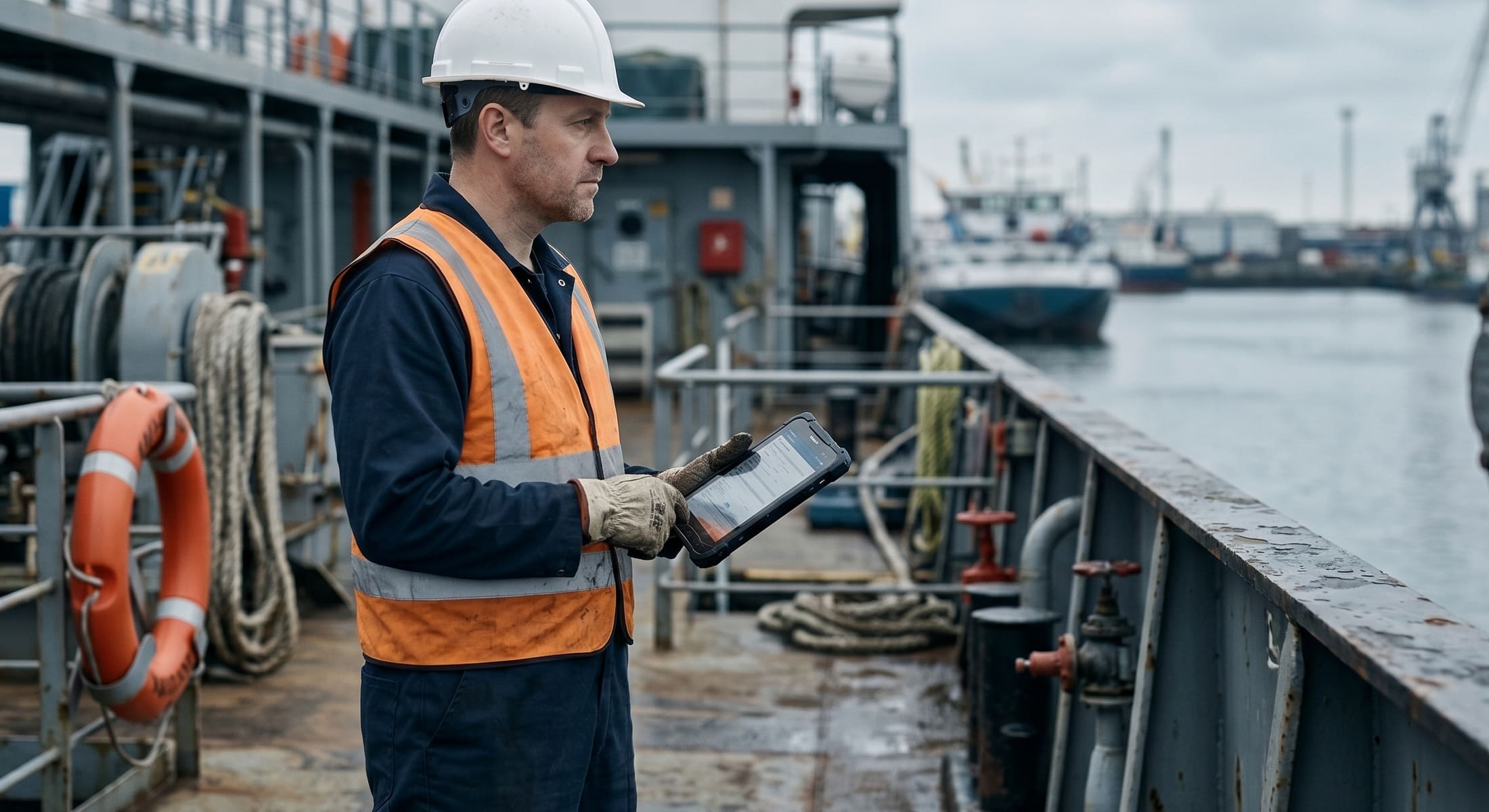
A vetting inspector reviewing items on a rugged tablet on a ship's deck.AI-generated
With Fleetward

From questionnaire to close-out.

What Fleetward does at each point of a vetting cycle, whichever standard the charterer brings.
A questionnaire arrives, tied to a fixture with a date on it.

The right template, immediately. Regime tagged checklists match the standard the ship faces next.

Work assigned by rank. Master, officers and crew each see their own items from day one.

Walk the ship the way the inspector will, on your schedule.

One record, many standards. Shared condition and crew items are captured once, serve all.

AI flags what an inspector would. Weak items surfaced per vessel while there is time to act.

Whichever standard applies, the questions land on the same deck.

Evidence against every item. Photos, notes and dates sit where the question will be asked.

No reconstruction under pressure. The record was built across weeks, not the night before.

Corrected, shown corrected, and ready for the next charterer.

Gaps closed before the decision. Each finding becomes a task, done while the fixture is still open.

Ready for the next request. The record carries forward as a current baseline.

AI on board

The model reads the record with you.

Notes cleaned upRough notes typed on deck come ashore readable.
Note enhancementRough remarks tightened into inspection-ready notes.
Gap analysisItems missing required evidence, flagged per vessel.
Predicted findingsLikely observations surfaced while there is time to fix them.

Assistive by design. The crew and the office review everything the model suggests.

See it in Fleetward

The same evidence, organized the way vetting is inspected.
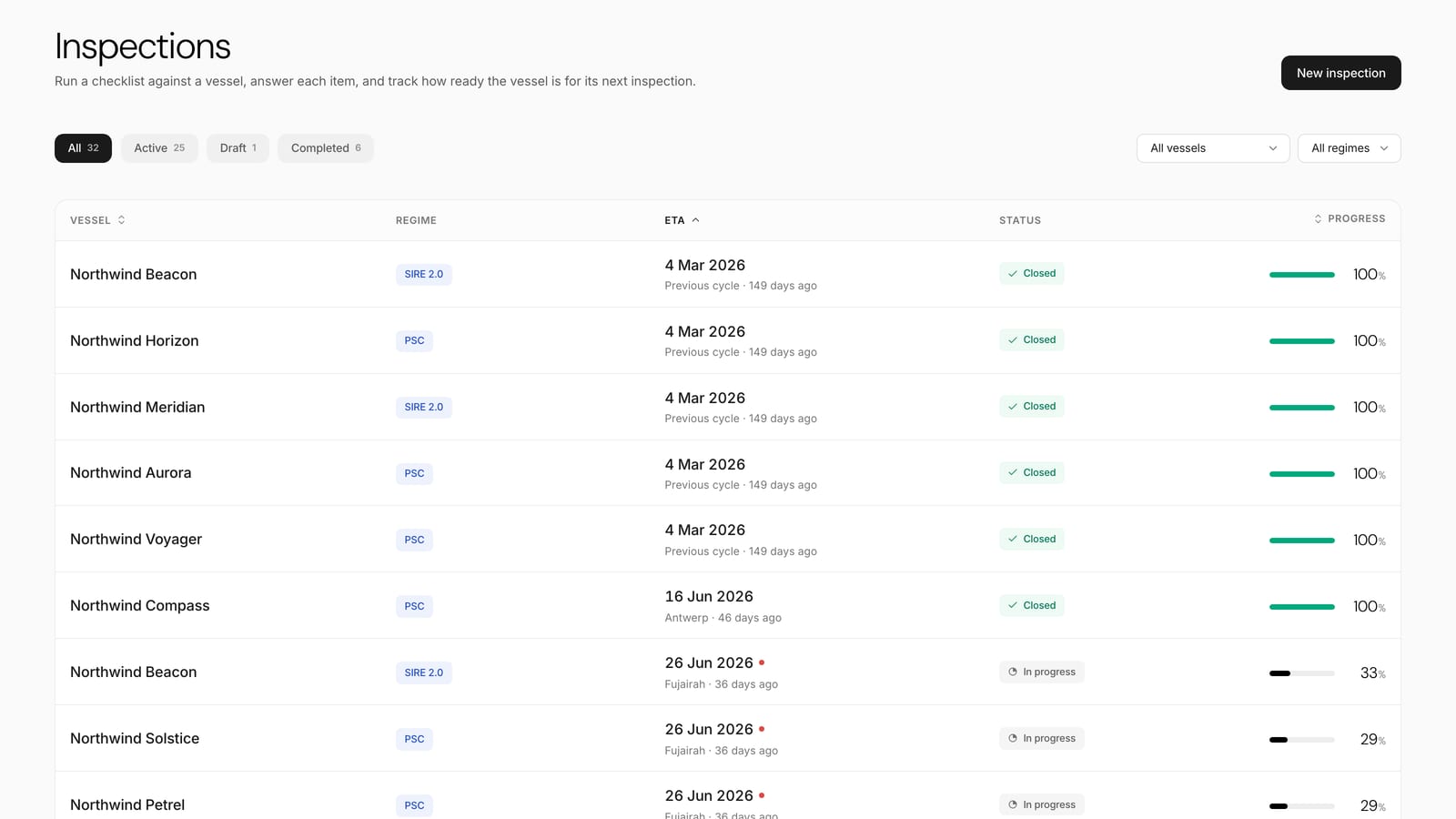
The inspections list in Fleetward: PSC, SIRE 2.0 and ES-TRIN runs across the fleet, with status and progress per vessel.
The stakes

What rides on the vetting

Per fixture

how often tankers face vetting: the result decides whether the cargo is yours

~400

standardized items on the public PSC and SIRE checklists a crew has to hold ready

Pool points

for pooled tankers, inspection outcomes set the vessel's share of pool earnings

New to vetting? Read the preparation guide

A tanker working cargo alongside a terminal.
AI-generated

One record, whichever standard arrives.

SIRE 2.0, the RISQ, CDI or the charterer's own list: the evidence is already there.

See your fleet's vetting readiness in one board.

Fleetward is in beta. Leave your details and we will set up a walkthrough with the team, on your vessels' real workflow.

Fleetward does not vet your ship or speak for the charterer. It structures the pre-vetting and keeps the evidence ready, so fewer issues reach the inspection that decides the fixture.

By sharing your details you agree we may contact you about Fleetward. See our Privacy Policy.

Questions, answered plainly.

The ones your ship faces: SIRE 2.0, RightShip and the RISQ, CDI, charterer-custom questionnaires, plus your own internal audits and ISM requirements. Templates are tagged per regime.

Largely, yes. The condition, documentation and crew familiarity they check overlap a lot, so the same dated evidence does much of the work across regimes.

No. It is the pre-vetting you run yourself first, so the official inspection finds a ship that is already in order.

Yes. Custom templates sit alongside the regime tagged ones, so internal audits and ISM checks run through the same capture and close-out flow.

Ready before the charterer asks.

See how Fleetward keeps vetting evidence current across your fleet. Book a walkthrough before the next questionnaire.

All solutions