Guide
How to prepare for charterer vetting
19 June 2026 · 8 min read
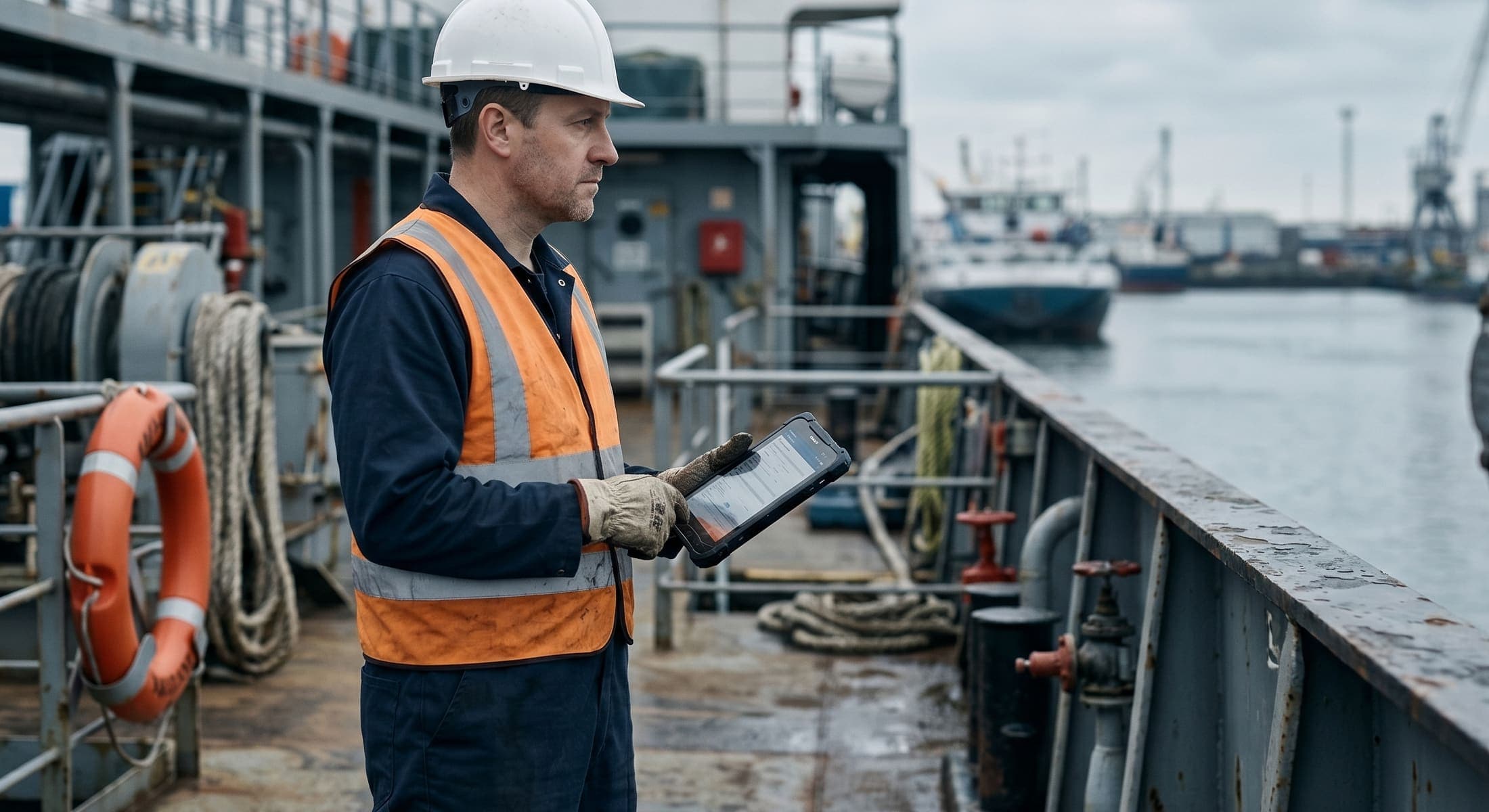
Vetting is the due diligence a charterer or terminal runs before they trust a vessel with cargo. It is not a single inspection or a single score. It is a judgement, drawn from several formal regimes and the charterer's own checks, about whether the ship is an acceptable risk for the fixture. Lose it and the cargo goes to another vessel.
This guide covers what vetting draws on, how the pieces fit together, and why the vessels that pass are the ones that pre-inspected against the right standard and closed the gaps first.
What vetting draws on
Depending on the trade and the charterer, vetting pulls from several sources at once:
- SIRE 2.0for tankers: OCIMF's risk-based, photo-evidenced inspection, the report charterers read before loading oil, chemical or gas cargoes.
- RightShip and the RISQ in dry bulk: a charterer-facing assessment of condition and management that feeds a safety score.
- CDIfor chemicals: the Chemical Distribution Institute's inspection and database scheme.
- The operator's own systems:TMSA for tanker shore-side management, the ISM-required safety management system, and the company's internal audits.
- The charterer's own checks:trading history, the vessel's PSC record and Ship Risk Profile, and any prior experience with the operator.
Most of it is the same work, seen from different angles
It is easy to treat each regime as a separate project. In practice they ask many of the same questions: is the vessel in good condition, is the documentation in order, and can the crew demonstrate the procedures that sit behind both. A photo of a maintained piece of fire-fighting equipment, with a note of who checked it and when, serves a SIRE 2.0 question, a RightShip item and an internal audit at the same time. The operators who vet well build one evidence record and let it serve every angle, rather than rebuilding it for each inspector.
Pre-vetting is doing the inspector's job first
The single most effective vetting tactic is a pre-vetting: a structured walk-through, run against the standard the vessel faces next, before the official inspection. Done well, it surfaces what the inspector would find while there is still time to act. A pre-vetting that reduces risk:
- Uses the right standard for the trade, matching the regime the vessel faces next rather than a generic checklist.
- Captures evidence the office can see, a photo and a note per item, visible to shore as it lands rather than buried in a chat thread.
- Covers internal audits and ISM in the same pass, with the same record, so one walk-through serves several requirements.
- Turns gaps into tasks, routed to the crew member who can close them before the real inspection.
The crew is sampled as much as the ship
Across every regime, inspectors test whether procedures live in practice. An officer who cannot operate a piece of safety equipment, or a crew that cannot demonstrate a drill, points to a management system that exists only on paper. Familiarity is prepared the same way as condition: run the drills for real, and make sure the people aboard can show the procedures, not just point to the binder.
How Fleetward fits
Fleetward structures the pre-vetting your crew already runs and keeps the evidence ready across the regimes the vessel faces. The crew documents the walk-through on mobile, the office sees it the moment it lands, and the items most likely to draw a finding surface first. One record serves the charterer's vetting, the internal audit and the ISM review at once.
An honest word on the limits: Fleetward does not vet your vessel or speak for the charterer, and no tool decides a fixture. What a current, ordered evidence record does is make sure fewer issues reach the inspection that decides it, and that the ones that remain can be answered with proof.