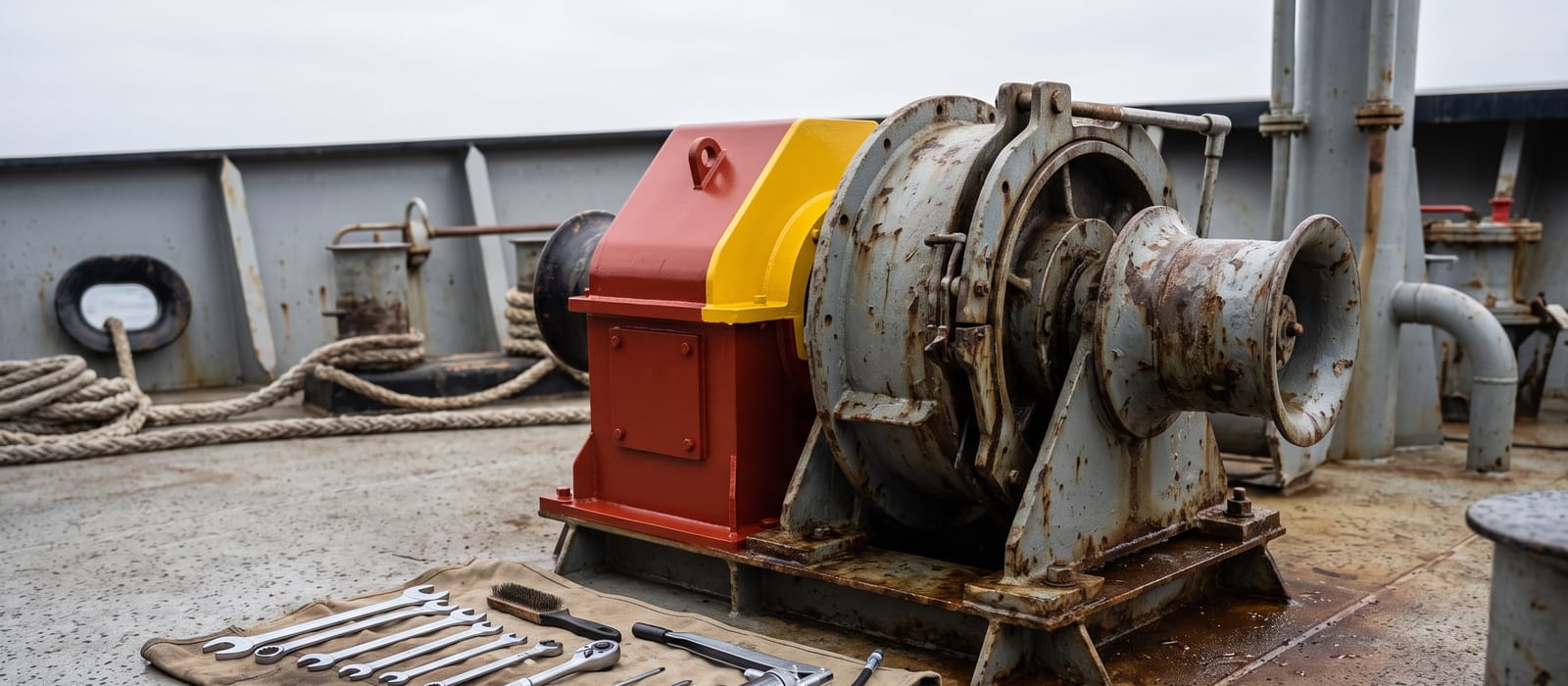
Closing out a PSC deficiency means rectifying it within the deadline set by its action code, then having the rectification verified: by the returning officer before departure for detainable items, by the flag or a later inspection for the rest. In the Tokyo MoU database, the entry closes only when a PSC officer confirms the fix.
What is a PSC deficiency close-out?
A close-out has two layers, and confusing them is where operators get burned. The first is physical rectification: the fire damper works again, the chart folio is corrected, the rest-hour records are complete. The second is administrative verification: someone with the authority to close the entry has confirmed the fix, on the timeline the action code demands. A deficiency that was fixed but never verified is still open in the database, and an open deficiency is the first thing the next boarding officer reads.
Close-out does not remove the deficiency from the ship's inspection record. The finding stays in the history that feeds the Ship Risk Profile for 36 months. What close-out does is stop the finding compounding: an open deficiency invites a follow-up inspection, colours the next officer's view of the ship, and if it was detainable, keeps the ship alongside.
How do you prove a deficiency was rectified?
Who verifies depends on how the deficiency was coded. For a detainable deficiency, Paris MoU guidance is explicit: the ship is detained precisely because the deficiencies merit an officer returning on board to be satisfied they are rectified before the ship sails. Where local repair is impossible, the officer can agree the ship sails to a repair yard under action code 46, and the follow-up happens there.
For non-detainable deficiencies the burden shifts to the ship. Code 17 makes rectification before departure the master's responsibility, usually with no re-visit at that call; the proof is examined at the next inspection. Code 16 gives 14 days, with the flag state informed. Code 15 defers verification to PSC at the next port, which means the ship arrives somewhere new with a known open item on her record, and the boarding officer there starts with it. The Tokyo MoU's own FAQ states the rule plainly: outstanding deficiencies can only be closed in the database once a PSC officer has verified rectification at a follow-up inspection. Whatever the code, assume a stranger in a boiler suit will one day ask to see the proof.
What evidence do PSC officers expect?
Evidence that closes a deficiency answers three questions without discussion: what was wrong, what was done, and when. In practice that means:
- Dated photographs of the deficiency and of the completed rectification, ideally from the same angle.
- Work records: the job in the planned maintenance system, work orders, and spare parts or requisition records tied to the item.
- Third-party confirmation where the item warrants it: a service technician's report for fixed systems, a class survey statement for structural, machinery or certificate matters.
- Updated documents where the deficiency was documentary: corrected record book entries, amended SMS procedures, refreshed familiarisation records.
- For crew-competence findings, evidence the drill or training was repeated and who took part.
Weak evidence is the common failure. An undated photo of a fire damper proves a damper existed at some point; it does not prove this damper worked after that inspection. Officers read evidence the way auditors do, so the timestamp, the location and the link to the specific deficiency carry as much weight as the image. This is also where a tamper-evident capture trail earns its keep: a photo with a verifiable time and position needs no argument.
Which rectification deadline applies (before departure, next port, within 14 days)?
The action code recorded against each deficiency on Form B of the inspection report sets the deadline. The codes below are from the Paris MoU's current guidelines on detention and action taken; the Tokyo MoU uses harmonised codes, recording detainable deficiencies under its code 30.
| Code | Deadline | Verified by |
|---|---|---|
| 10 | Already rectified | The PSCO, during the inspection |
| 17 | Before departure | Master's responsibility; checked at a later inspection |
| 16 | Within 14 days | Flag state informed; checked at a later inspection |
| 15 | At the next port | PSC at the next port of call |
| 46 | At the agreed repair port | Follow-up at the repair port (detainable items) |
| 21 | Within 3 months | Company-level ISM corrective action, flag and RO involved |
Detention itself is not an action code under the Paris MoU; the officer marks the individual deficiencies as grounds for detention and the ship is released only after on-board verification. If any code on the report is unclear, our guide to reading deficiency codes walks through the full form.
How do you stop the same deficiency recurring across the fleet?
A deficiency that recurs on a sister ship six weeks later was never really closed. The fix stayed local: the item was repaired, the entry was verified, and nothing travelled. Fleet-level close-out means someone ashore looks at every new finding and asks whether the condition exists elsewhere, then checks rather than assumes. The pattern is easiest to see in the data: the same deficiency group appearing across vessels, or the same handful of recurring areas absorbing most of the findings, points at a procedure or a supplier, not at one lazy crew.
The practical mechanism is the pre-inspection checklist. Every closed deficiency should change what the crews check before the next arrival, so the item that caught one ship is on every ship's list within the week, with the pre-inspection routine picking it up before an officer does. The cost of skipping this loop is not abstract: repeat findings escalate the risk profile, and a detention carries a six-figure bill and a three-year shadow.
What role does the ISM corrective action process play?
For anything beyond a trivial fix, PSC deficiencies belong in the ISM corrective action system, because that is the machinery the ISM Code already requires. Section 9 of the Code obliges the safety management system to include procedures for reporting non-conformities to the company, investigating and analysing them, and implementing corrective action; the 2008 amendments added measures intended to prevent recurrence. Class society guidance on PSC detentions points the same way: root cause analysis under the ISM Code is what resolves the underlying issue rather than the symptom.
There is also a hard-edged reason to take this seriously. An ISM-coded deficiency can carry action code 21, requiring company-level corrective action within 3 months, and a cluster of individually minor deficiencies is read as evidence the SMS is failing, which is the classic detention pattern. The DPA who can show a documented chain, from finding to root cause to corrective action to fleet-wide check, is holding the exact evidence the next inspection and the next external audit will ask for.