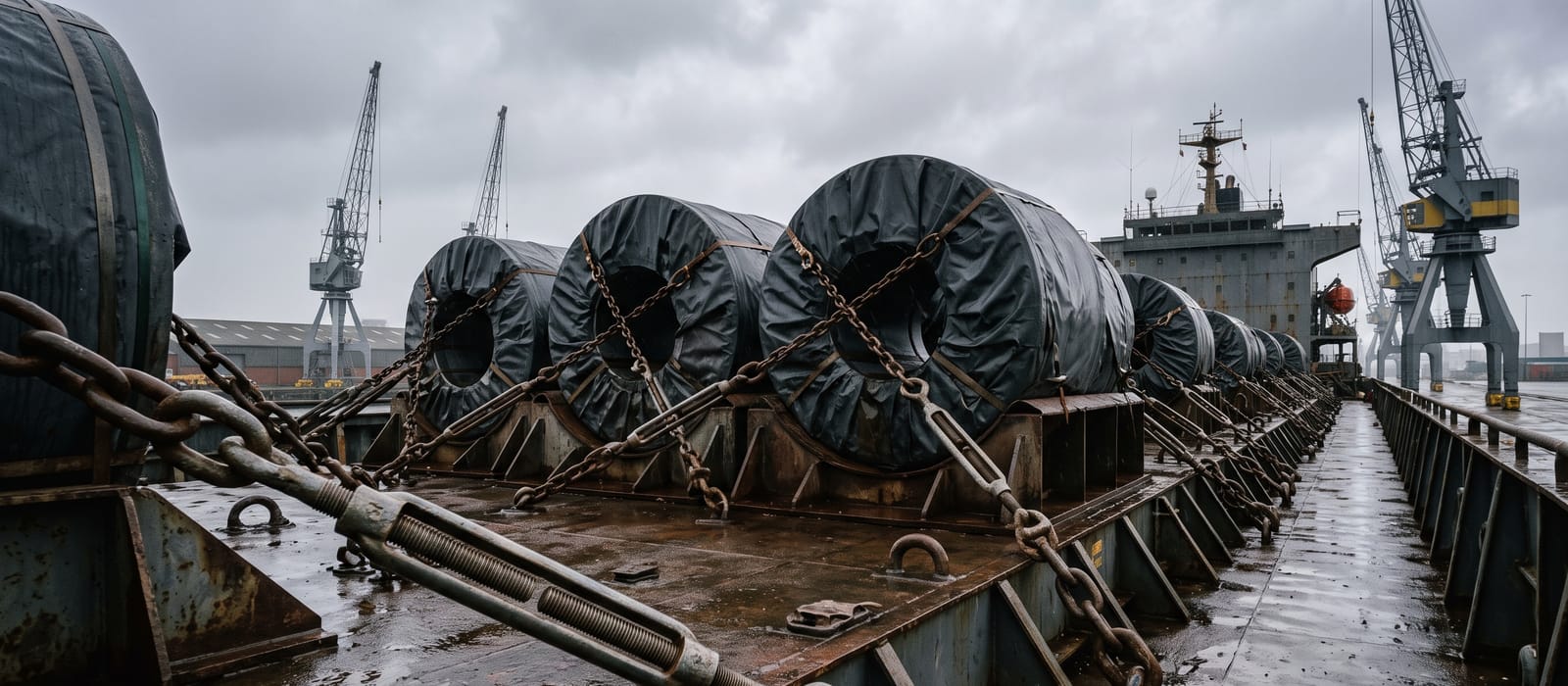
A Concentrated Inspection Campaign (CIC) is an annual, themed add-on to routine Port State Control inspections: for three months, officers work through a standard questionnaire on one topic across every inspection in the region. The 2026 campaign targets cargo securing, jointly under the Paris and Tokyo MoUs, and is expected to run 1 September to 30 November, the window every recent campaign has used.
What is a concentrated inspection campaign?
A CIC is how the PSC regimes turn a regional concern into three months of focused checking. Each year the MoU committees pick a topic where deficiency data or casualty reports suggest widespread weakness, prepare a short questionnaire for their officers, and apply it during every routine inspection in the campaign window. Recent campaigns show the pattern: ballast water management in 2025, fire safety in 2023, both run jointly by the Paris and Tokyo MoUs, with several of the smaller regional MoUs adopting the same questionnaire.
The point is leverage. A single themed question set, applied across thousands of inspections in Europe and Asia-Pacific in the same quarter, produces a data set no single port state could gather and pushes the industry to fix one problem area at scale. For the ships being boarded, it means the topic of the year is effectively guaranteed to be examined, which is rare certainty in a regime built on sampling.
How does a CIC differ from a routine PSC inspection?
It does not replace the routine inspection; it rides on it. The ship is still selected through its risk profile and inspection window, the officer still covers the normal scope, and everything found still lands in the record the same way. The differences sit on top:
| Routine PSC inspection | During a CIC window | |
|---|---|---|
| Selection | Ship Risk Profile and time window | Unchanged |
| Scope | Officer samples from the full scope | Normal scope plus the CIC questionnaire |
| Predictability | Sampled, varies by officer | The CIC topic is checked on effectively every inspection |
| Deficiencies | Recorded, action-coded, possibly detainable | Same treatment; CIC findings are flagged to the campaign topic |
| Aftermath | Feeds the ship's 36-month record | Also feeds the published campaign results |
The practical consequence: during the window, the campaign topic stops being a sampling risk and becomes a certainty. A gap that might have gone unnoticed in March will be found in October. Because CIC findings are ordinary deficiencies, they feed the same 36-month history that drives the Ship Risk Profile, and a detainable one carries the full cost of any detention, laid out in detention costs and consequences. The detention cost calculator puts a number on that exposure for your vessel type.
What is the 2026 CIC about and when does it run?
The 2026 campaign targets cargo securing: the equipment, documentation and working practices that keep cargo fastened at sea. The Paris MoU's 59th Committee reconfirmed it in May 2026 as a joint campaign of the Paris and Tokyo MoUs, so the same questionnaire meets a ship in Antwerp and in Yokohama. The formal launch announcement with the exact dates is still to come, but every recent campaign has run 1 September to 30 November, and there is no sign 2026 will differ.
The regulatory backbone is familiar. SOLAS chapters VI and VII require cargoes to be stowed and secured in line with a Cargo Securing Manual approved by or on behalf of the flag state, drawn up to the standard of the IMO's Code of Safe Practice for Cargo Stowage and Securing (the CSS Code). The manual is ship-specific: it describes the fixed and portable securing devices this ship carries, and how each cargo type it handles is to be secured with them.
Exposure varies by trade rather than by list. Container ships, general cargo ships, ro-ro vessels and bulk carriers carrying steel or timber face the deepest questioning because their securing arrangements are complex and heavily used. But the manual and its implementation can be checked on any ship that secures cargo, and campaign questionnaires are written to be asked broadly.
What will officers check under the cargo securing campaign?
Expect the questionnaire to move from paper to practice, as every recent campaign has:
- The approved Cargo Securing Manual is on board, flag-approved, and matches the ship's current securing arrangement and equipment
- Fixed securing points (lashing eyes, twist-lock foundations, D-rings) are in sound condition, free of cracks, wastage and deformation
- Portable securing gear (lashing rods, turnbuckles, chains, web lashings, twist-locks) is in good order, of the type the manual specifies, and in sufficient quantity
- Inspection and maintenance records for securing equipment exist and are current
- The current cargo is actually secured as the manual requires, and the stowage matches the plan
- The officers and crew responsible can explain and demonstrate the securing procedures for the cargo on board
The last item deserves emphasis, because campaigns consistently find their deficiencies in the gap between the manual and the deck. A complete manual with corroded lashing gear underneath it, or a well-stocked lashing store the crew cannot connect to the manual's requirements, is exactly the finding this questionnaire is designed to surface. The same gap between documentation and demonstrated practice tops the year-round statistics too, as the pattern in the most common PSC deficiency areas shows.
How should a fleet prepare before the window opens?
The window is expected to open on 1 September 2026. That leaves August: enough time for a documented walk-through and the resulting fixes on every ship, not enough time to defer any of it. A concrete sequence for the month:
- Confirm the Cargo Securing Manual on each vessel is the flag-approved edition and still describes the ship as she is. A manual that predates a change of securing equipment is itself a finding.
- Have the crew run a full inventory and condition check of portable securing gear against the manual's quantities, with photos of what they find, and check fixed fittings in the cargo spaces and on deck while they are at it.
- Pull the maintenance and inspection records for securing equipment and close the gaps now, while a missing entry is a housekeeping item rather than a deficiency.
- Brief deck officers on the campaign: on what a PSC officer will ask, and on demonstrating the securing of the cargo actually on board against the manual.
- Put the findings in front of the office, fix what the walk-through surfaces, and photograph the fixes before first port calls in September.
Vessel-specific line items for this kind of walk-through are collected in the pre-inspection checklist by vessel type, and the general routine, who walks, what gets captured, how the office follows up, is the subject of how to prepare for a PSC inspection.
Where is the official CIC questionnaire?
The MoUs publish the official questionnaire on their websites, typically a few weeks before the campaign opens, alongside a press release confirming scope and dates; the 2025 ballast water campaign followed exactly that pattern. As of late July 2026 the cargo securing questionnaire has not yet been published. Watch the news pages of parismou.org and tokyo-mou.org, or your flag state and P&I club circulars, which normally republish it within days.
Prepare from the conventions rather than waiting for it. Past questionnaires have been short, ten questions in the 2025 ballast water campaign, and have never strayed from the underlying instruments: the manual, the equipment, the records, the crew. A ship that can show all four in order in August will not learn anything frightening from the questionnaire in September. This page covers each year's campaign as it is announced; the campaign-specific sections above are updated when the next topic is confirmed.