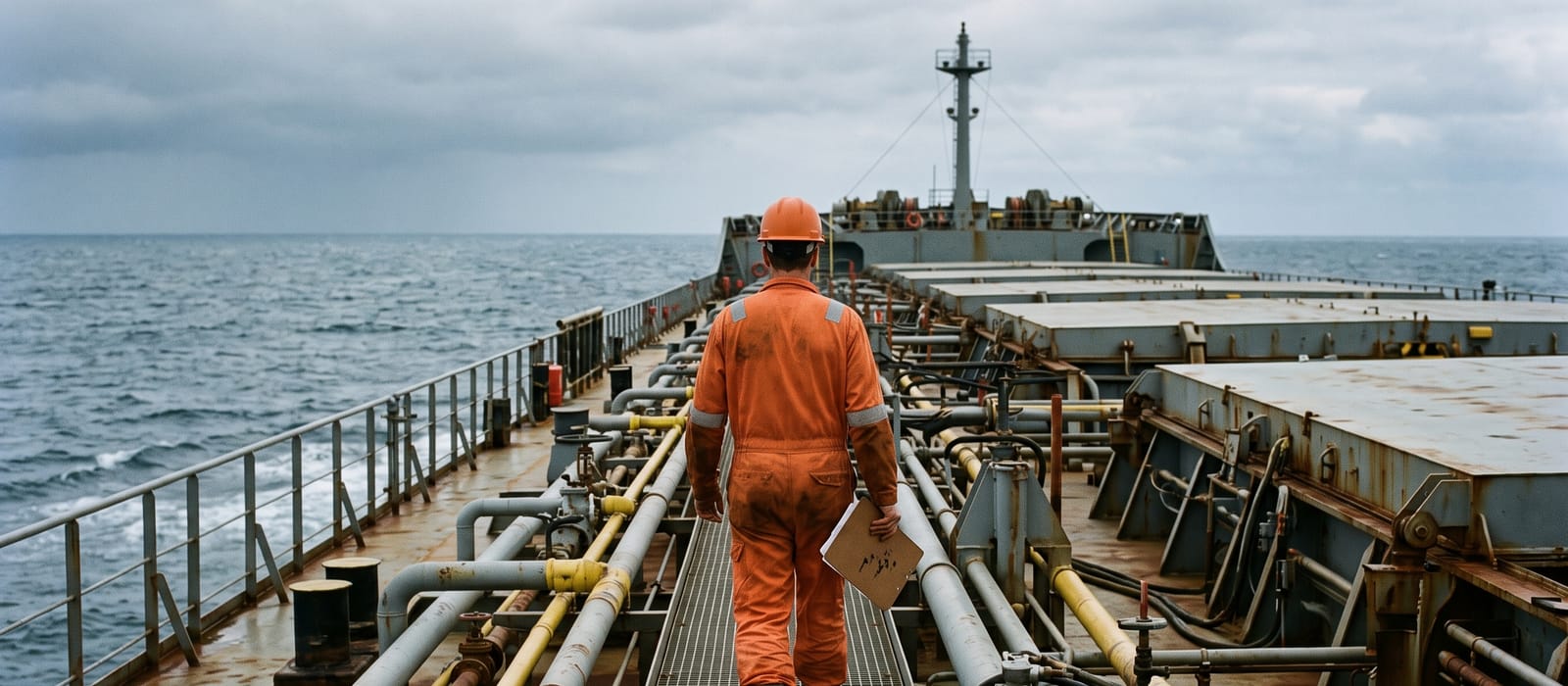
The core of a PSC inspection is the same on every ship: certificates, fire safety, life-saving appliances, navigation, working and living conditions. Vessel type decides the extra layer. Tankers and gas carriers face expanded inspection, bulk carriers get structural attention, container ships and ro-ros get cargo securing. Below, a crew-runnable checklist for each.
Does PSC check the same things on every ship type?
The foundation is identical everywhere because the conventions are: SOLAS, MARPOL, MLC and STCW apply to a chemical tanker and a ro-ro alike, and the deficiency areas that recur year after year are led by fire safety and life-saving appliances on every hull form. What differs by type is targeting and depth. Ship type is a parameter in the Ship Risk Profile, and the risk types (chemical tankers, gas carriers, oil tankers, NLS tankers, bulk carriers and passenger ships) become eligible for expanded inspection once they pass 12 years of age. So a crew prepares in two passes: the universal core first, then the layer their ship type attracts.
The universal core, drawn from what officers reach for first:
- Statutory certificates valid, endorsed, and findable in under a minute
- Oil Record Book and Garbage Record Book complete and consistent with the logs
- Fire doors, dampers and extinguishers operational, in date, in place
- Lifeboats, davits, immersion suits, EPIRB and pyrotechnics checked and in date
- Charts and publications corrected; navigation lights and bridge equipment working
- Hours-of-rest records complete and matching the reality of the schedule
- Crew able to demonstrate drills and operate the safety equipment at their muster stations
This is the standing work. Everything below assumes it is already done, because no type-specific preparation survives an expired certificate. Fleetward's crew checklists are built the same way: the universal core plus the layer for the vessel type, assigned per crew member with photo evidence per item.
What extra items apply to tankers and gas carriers under expanded inspection?
An expanded inspection is longer and deeper, working through defined risk areas: structural condition, watertight integrity, emergency systems, fire safety, cargo operations, pollution prevention, and living and working conditions among them. The ship must notify the port 72 hours before arrival, which cuts both ways: the port knows you are coming, and so does your crew. Those 72 hours are the pre-inspection window.
For an oil, chemical or gas tanker, the type-specific pass concentrates on the cargo system:
- Inert gas system operational, alarms and trips tested, records available
- Cargo pump room: gas detection working, ventilation running, bilges clean
- P/V valves and cargo tank venting arrangements tested and free
- Fixed deck foam system: line-up correct, monitors free, foam concentrate in date
- Manifold area: hoses and reducers in test, drip trays clean, spill equipment staged
- Gas carriers: cargo containment monitoring, gas detection calibration records, ESD system tested
- Certificate of Fitness (IBC or IGC Code) aligned with the cargoes actually carried
- Breathing apparatus and cargo-specific PPE complete and in test
Tanker crews carry a second burden: the same equipment is examined by commercial vetting, on different questions and a different cadence. How SIRE 2.0 and PSC differ matters because preparing the two together, off one evidence trail, is far cheaper than preparing them twice.
What are bulk carriers checked for that other ships are not?
Structure. Bulk carriers earned their own SOLAS chapter (Chapter XII) after a generation of losses, and officers board them with that history in mind. Hatch covers are the classic finding: weathertightness, securing devices, gaskets and compression bars, and whether the crew can actually operate and secure them. Below deck, the focus is hold condition, frames and brackets, and the equipment SOLAS XII added:
- Hatch covers: gaskets, cleats and securing devices sound; hydraulics not leaking; covers close and seal
- Cargo holds: frames, brackets and tank-top plating free of unreported damage or wastage
- Water ingress alarms tested with records to show it
- Bilge wells clean, sounding pipes clear, hold ladders safe to use
- Loading instrument operational and approved; loading manual on board and in use
- BLU Code loading/unloading plan communication with the terminal documented
- Ballast tanks: coating condition known, anodes where required
An older bulker sits in the expanded inspection net once past 12 years, and her hold and hatch photographs from the last cycle are exactly the evidence that shortens an argument about deterioration. If the last cycle's photos live in a chat thread, they might as well not exist.
What should container and ro-ro crews check before arrival?
Cargo securing, and this year with unusual weight behind it: the 2026 joint Paris and Tokyo MoU concentrated inspection campaign targets exactly this area, in the usual September to November window. Officers will work from a topic questionnaire on every inspection during the campaign, so the Cargo Securing Manual and the state of the lashing gear stop being background items.
- Cargo Securing Manual on board, approved, and matching the securing equipment actually in use
- Lashing gear inventory: twistlocks, lashing rods and turnbuckles serviceable, condemned gear landed
- Lashing plans followed and consistent with the manual, not with habit
- Dangerous goods: documentation, stowage and segregation per the ship's DG certificate
- Ro-ro: bow, stern and side doors sealing correctly, indicators and alarms tested
- Vehicle decks: ventilation running during operations, fixed fire-fighting system lined up, drainage clear
- Securing points and deck lashings on vehicle decks free of wastage
Ro-ro door findings deserve respect beyond their deficiency code. Officers treat door integrity as a survival issue, not a maintenance item, and a failed indicator lamp invites a much longer look at the whole closing arrangement.
What does a crew-runnable pre-arrival checklist look like?
Not a laminated sheet. A full pre-inspection library runs to several hundred items, of which an officer samples only a fraction, and no crew can hold that in memory or on paper across a port-call-heavy schedule. A checklist the crew will actually run has four properties. It is filtered: this vessel type, this regime, this port call, drawn from a maintained library rather than a generic template. It is assigned: each item has an owner, so "the crew" is never the responsible party. It leaves evidence: a photo and a timestamp per item, so the office can see completion rather than ask about it. And it feeds forward: findings from each inspection's outcome and every closed deficiency reshape next month's list.
That last property is the one paper cannot deliver, and it is where the fleet either learns or repeats itself. The full PSC guide series covers the surrounding workflow, from preparation through close-out.