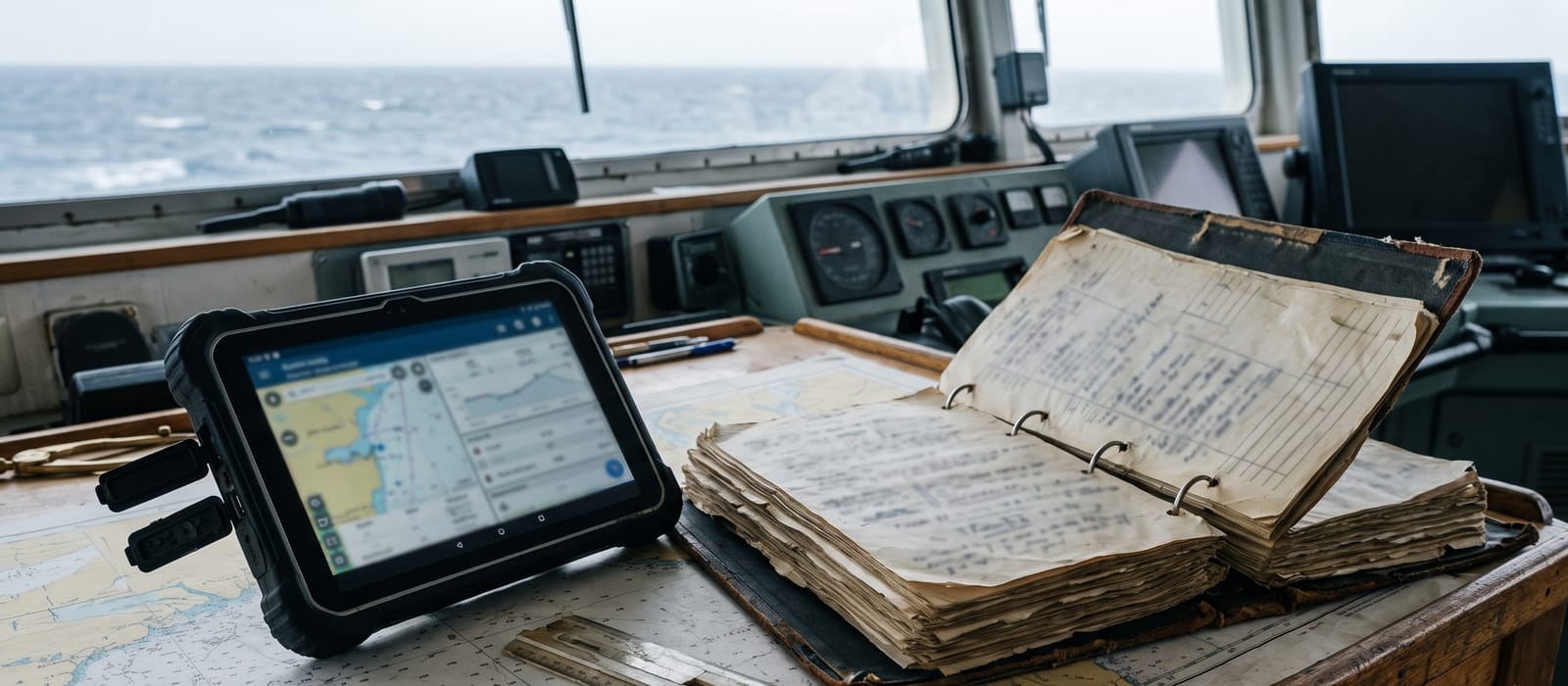
SIRE 2.0 replaced the VIQ7-based SIRE inspection on 2 September 2024. The fixed questionnaire every tanker answered the same way gave way to a vessel-specific compiled questionnaire (the CVIQ), completed in real time on a tablet, supported by photographs, and answered across hardware, process and the human element.
What is the difference between SIRE 2.0 and VIQ7?
VIQ7 was a fixed questionnaire; SIRE 2.0 is a question library plus an algorithm. Under VIQ7, every tanker of a given type faced essentially the same list, the operator could self-assess against it line by line, and the inspector wrote the report after leaving the ship. Under SIRE 2.0, software compiles a bespoke question set for each inspection, the inspector answers it on board as the inspection happens, and the crew is assessed as directly as the equipment.
| VIQ7 | SIRE 2.0 | |
|---|---|---|
| Questionnaire | One fixed VIQ, published in full; the same set for every vessel of the type | A CVIQ compiled per vessel, per inspection, from the SIRE 2.0 question library |
| Delivery | Inspector worked through the questionnaire and completed the report afterwards | Responses recorded in real time on an intrinsically safe tablet that syncs before and after the visit |
| Evidence | Written observations; photographs the exception | Documentary evidence and photographs attached to individual questions; the operator also maintains a photo repository |
| Crew assessment | Indirect, through certificates, paperwork and conversation | An explicit human response tool: officers demonstrate tasks, and performance influencing factors are recorded |
| Reporting | A comparatively compact, static report | A structured report with observations classified by subject and nature of concern, plus a 14-day operator comment window |
The vocabulary changed with the structure. Anyone still preparing "for the VIQ" is preparing for a document that no longer exists; the working documents are now the question library, the HVPQ, the PIQ and the CVIQ, all explained in how the CVIQ is compiled for each inspection.
When did SIRE 2.0 replace the old programme?
The switch completed on Monday 2 September 2024, when OCIMF withdrew the option to request a VIQ7 inspection. From that date every SIRE inspection is a SIRE 2.0 inspection.
The transition was long and deliberate. OCIMF published the SIRE 2.0 question library in January 2022 so operators could study the new material years ahead. Phased trials followed, with enough SIRE 2.0 inspections completed in the final phase for all sectors of the industry to take part before the cutover was confirmed. When OCIMF announced the go-live date in July 2024, it gave operators roughly 60 days to finish familiarising crews and to complete their Pre-Inspection Questionnaire work. VIQ7 itself dated from 2018, so the questionnaire it retired had shaped tanker vetting for six years.
For an operator reading its own fleet history: reports from before September 2024 describe a different inspection. Comparing a VIQ7 report with a SIRE 2.0 report question by question does not work, because the questions and the response structure are different instruments.
What is genuinely new in SIRE 2.0?
The compilation is the deepest change. Because each CVIQ is assembled from the library using the vessel's type, its declared particulars and its operator's pre-inspection data, the ship's own paperwork now shapes which questions get asked. The selection logic behind that, core questions plus rotational, conditional and campaign material, is set out in the four SIRE 2.0 question types.
The second change is how a question is answered. Most VIQ7 questions resolved to yes or no. A SIRE 2.0 question can carry up to three response tools: hardware (is the equipment fit for purpose), process (does a procedure govern it) and human (can the responsible crew member actually do it). Each tool can generate its own observation, and the human tool can also record a positive observation where performance exceeded normal expectations. Where performance falls short, the inspector selects performance influencing factors from prescribed lists, the subject covered in human factors and PIFs in SIRE 2.0.
Third, the inspection is photographed. Operators upload standard photographs of the vessel to a photo repository before the inspection, and the inspector is expected to support negative observations with photographs wherever that adds value to the report.
Finally, the report itself is a different product: structured responses per question, observations classified by subject of concern and nature of concern, and a 14-day window for operator comments before the report publishes to the database charterers read.
Does SIRE 2.0 ask more questions than VIQ7?
Per inspection, no. The compiled set is a subset of the library, sized to what an inspector can cover in a working day on board, and smaller than the full VIQ7 list an operator used to self-assess. What grew is everything around the set: the library the questions are drawn from is larger than any single questionnaire, the selection is deliberately unpredictable, and each question now runs up to three assessments deep.
That trade is the point. OCIMF's guidance ahead of go-live was blunt: operators and crews must be prepared to respond to any question in the library, because nobody on board knows which subset the compiler will produce. Under VIQ7 a diligent crew could rehearse the known list. Under SIRE 2.0 the same effort has to go into the state of the ship, the procedures and the people, since those are what any drawn question will test. Fewer questions asked, more questions possible, and each one examined harder.
Is a VIQ7-style preparation still any use?
Parts of it. Certificates in order, machinery spaces clean, deck hardware maintained, records consistent: none of that stopped mattering, and a vessel kept to VIQ7 standard walks into a SIRE 2.0 inspection with its hardware leg already covered.
What no longer works is the method. Preparation built as a document review rehearses the crew for questions about paperwork, while the CVIQ asks officers to demonstrate tasks at the equipment. Preparation built on a fixed checklist covers the questions the old VIQ contained, not the rotational and campaign material the compiler may draw this time. And VIQ7-era preparation ignored the operator's own data entirely, when under SIRE 2.0 the HVPQ and PIQ feed the compiler and get checked against the physical ship.
VIQ7 preparation maintained the ship. SIRE 2.0 preparation also has to maintain the data, and the crew's ability to show their work.
What should an operator change first?
Start with the data, because it is cheap to fix and everything downstream depends on it. Verify that the HVPQ matches the ship as built and outfitted today, and treat the PIQ as an inspection document rather than an administrative one; wrong entries shape the question set and invite questions the ship cannot answer well.
Then change what a walk-through means. A pre-vetting round that only inspects hardware prepares one response tool out of three. Have the officer responsible for each area demonstrate the task while someone records the state of the item, the procedure reference and a dated photograph. A practical structure for that is in preparing crew and vessel for the CVIQ.
Last, give the office sight of it. The report lands on a vetting desk next to the rest of the fleet's history, and charterer vetting reads patterns across inspections, not single events. An operator who can see open items across vessels before each inspection is working the same way its reports will be read.