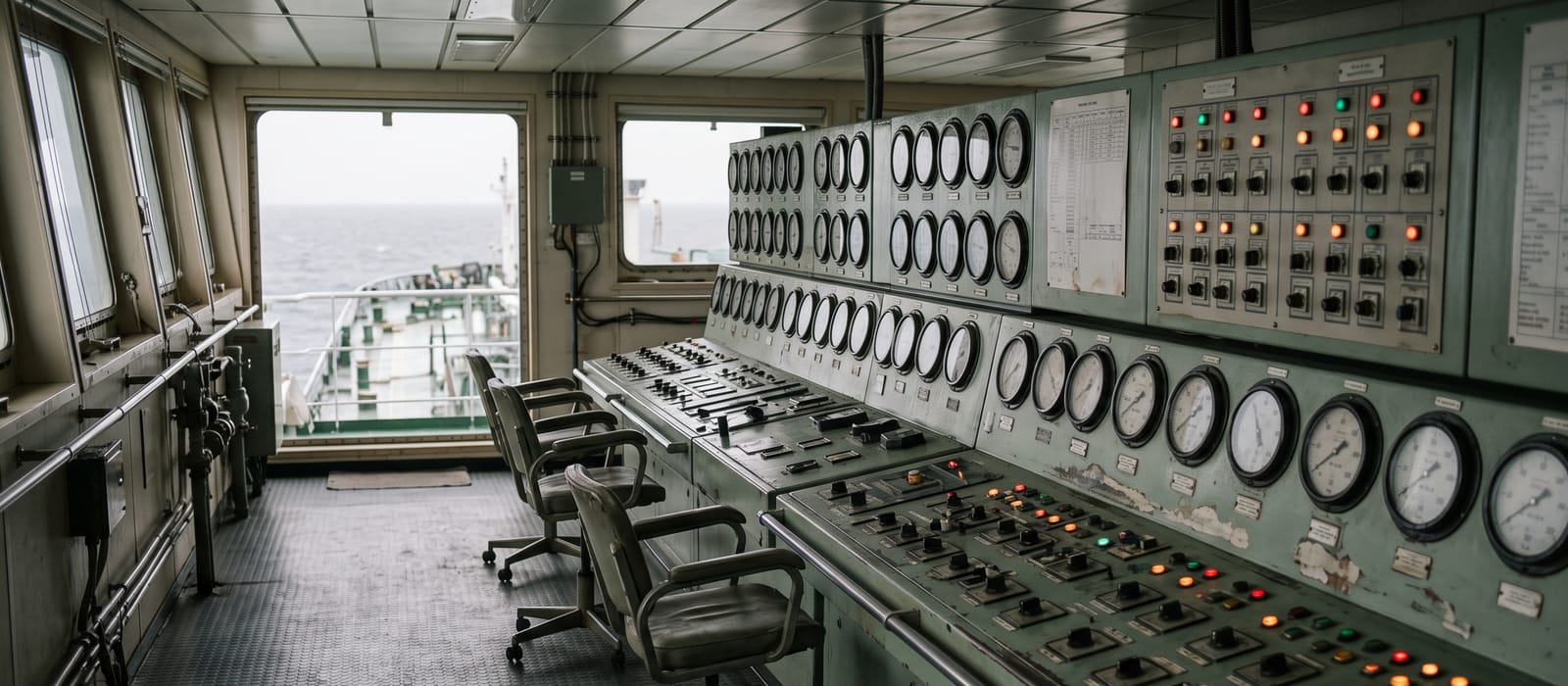
SIRE 2.0 classifies its questions into four types. Core questions appear in every inspection where they apply, rotational questions are allocated in unpredictable patterns, conditional questions are triggered by the vessel's own HVPQ and PIQ data, and campaign questions join every inspection for a fixed period when OCIMF responds to an industry trend.
What are the SIRE 2.0 question types?
Four types cover the whole library, and the type decides how a question reaches the inspector's tablet. The compiler assembles each CVIQ from all four, following the process described in how the CVIQ is compiled for each inspection.
| Question type | What it is | How it enters a CVIQ |
|---|---|---|
| Core | The minimum questions required to meet OCIMF's fundamental risk assessment criteria | Compiled into every inspection where applicable to the vessel |
| Rotational | Non-core questions from the library | Allocated occasionally, in deliberately unpredictable patterns |
| Conditional | Questions that verify operational history or operator oversight | Triggered by specific responses in the vessel's HVPQ or PIQ |
| Campaign | New or existing rotational questions given temporary priority | Assigned to every inspection for a fixed period, in response to incidents or trends |
The types are about selection, not severity. A rotational question is not a lesser question once it is compiled; the inspector works through the CVIQ as one questionnaire, and an observation counts the same whichever type produced the question.
What are core questions?
Core questions are the floor of every SIRE 2.0 inspection: the set OCIMF judges necessary to assess a vessel's fundamental risks, compiled wherever they apply to the ship's type and outfitting. If a core question applies to your vessel, it will be asked, this inspection and the next one.
That predictability makes core questions the natural backbone of preparation. They concentrate on the areas any vetting inspection has always cared about, and because they recur, a crew sees them again and again across inspection cycles. An operator who cannot answer the applicable core material well has a problem no amount of luck with the rotational draw will cover. The practical consequence: build the standing pre-vetting walk-through around the core scope for the vessel type, then treat everything else as variation on top. How to run that walk-through is covered in preparing crew and vessel for the CVIQ.
How do rotational questions work?
Rotational questions fill the rest of the questionnaire, and their defining feature is that nobody on board knows which ones are coming. OCIMF allocates them occasionally and in patterns designed to be unpredictable, so that over successive inspections a vessel's coverage extends across the library rather than repeating a fixed list.
The intent behind this explains the preparation problem SIRE 2.0 deliberately creates. Under the old fixed VIQ7 questionnaire, a crew could rehearse the published list and an inspection tested the rehearsal. Rotation removes that option: since any applicable library question may be drawn, the only preparation that holds is the actual state of the vessel, its procedures and its people. The change from rehearsable to unrehearsable is the heart of what changed between VIQ7 and SIRE 2.0.
For the crew, rotation also means an inspection can reach into corners the last three inspections skipped. An item nobody has asked about since 2024 is still in scope today.
What triggers a conditional question?
The vessel's own declared data. Conditional questions exist to verify aspects of operational history or operator oversight, and the compiler adds them when specific responses in the HVPQ or PIQ call for verification. The operator's paperwork, in other words, writes part of the questionnaire.
This is the type that makes data discipline an inspection issue rather than an administrative one. An entry in the PIQ about the vessel's recent operations can compile follow-up questions checking how those operations were managed; particulars declared in the HVPQ determine which equipment and configuration questions can apply at all. Answer those documents carelessly and the ship can face conditional questions it never needed to, or arrive at an inspection where the declared picture and the physical one disagree. The failure modes, and the housekeeping that prevents them, are set out in keeping PIQ and HVPQ data accurate.
A conditional question is not an accusation. It is the programme checking that what the operator said about the ship holds up on board, which is exactly why the trigger data deserves the same care as the ship itself.
What are campaign questions?
Campaign questions are OCIMF's way of pointing every inspection at the same subject for a while. When incident data or industry trends justify it, OCIMF assigns new or existing rotational questions to every inspection for a fixed period. During the campaign the questions behave like core, in every CVIQ regardless of the rotational draw; when the period ends, they revert to the normal rotation.
Tanker operators will recognise the pattern from Port State Control, where regional MoUs run themed concentrated inspection campaigns on the same logic. The operational implication is the same too: campaign topics are the one part of the variable question set an operator can see coming, because a campaign applies fleet-wide and industry-wide at once. When a campaign is active, fold its subject into the standing walk-through for every vessel, and expect the inspector to spend time there.
How is each question scored (hardware, process, human)?
It is not scored in any public sense, and the distinction matters: SIRE 2.0 produces no letter grade, no score and no pass or fail. What each question carries is up to three response tools, and the inspector records findings through whichever of them the question applies.
The hardware tool assesses the material condition of equipment. The process tool assesses whether suitable procedures exist and are in use. The human tool assesses how the responsible crew member performs the task, and it works in both directions: where performance falls short, the inspector selects performance influencing factors from prescribed lists to record why, and where execution exceeds normal expectations, the human tool can record a positive observation. The factors behind that assessment are the subject of human factors and PIFs in SIRE 2.0.
Negative observations are classified by subject of concern and nature of concern, and the inspector is expected to support them with photographs wherever a photograph adds value, which is why photo evidence in SIRE 2.0 inspections deserves its own preparation. Because one question can produce observations from more than one tool, a ship can be sound on hardware and still draw an observation on the same question because the procedure was missing or the demonstration went badly.
What readers of the report do with those observations is their own affair. Charterers apply their own thresholds when screening, so the report's weight is set at the vetting desk, not by any number on the document. Between inspection and publication the operator has 14 days to comment on the report, and the preparation that makes that window useful starts long before the inspector boards.